New Nexus Market mirror added
A new Nexus Market mirror has been added to the directory after passing PGP verification. The mirror is accessible via the Tor network and offers the same features as the primary address.
Nexus Market
Verified access directory
https://nexusb2l7hog66bnzz5msrz4m5qxj7jbi7aab3r65uzydy5mew2fu3id.onion.watchNexus Onion Link provides verified access to Nexus Market, an established darknet marketplace with 600 vendors and 45,000 active users. Every mirror listed here has been authenticated against the market's PGP signing key, ensuring you connect to the genuine Nexus Market onion address. The directory monitors uptime, security practices, and comparative features to help users navigate the darknet safely. (see Wikipedia's darknet-market entry)
The following Nexus onion links have been cryptographically verified using the market's PGP signing key. Each mirror is checked hourly for availability and authenticity.
| Mainmain | https://nexusb2l7hog66bnzz5msrz4m5qxj7jbi7aab3r65uzydy5mew2fu3id.onion.watch | |
This primary endpoint was last verified by the Nexus Market on 2026-08-20 05:45 UTC. PGP signature fingerprint matched: 8547 8376 3A2F BF65 6727. No phishing markers in response payload during inspection. Identified in this directory as the Main. | ||
Over the past month, three phishing mirrors mimicking Nexus Market have been identified. These clones use similar URLs and interface designs but fail PGP verification. Always use the Mirror Authenticity Check below before entering credentials.
Every Nexus onion link listed here is authenticated using the market's PGP signing key. This process ensures the mirror is genuine and not a phishing clone. (see Riseup's security writeups for why PGP matters)
The directory checks each Nexus Market mirror hourly for availability and authenticity. If a mirror goes offline or fails PGP verification, it is removed immediately.
Beyond uptime, this directory evaluates Nexus Market's features against peers. Security practices, payment options, and vendor policies are compared to help users make informed decisions.
Key metrics for Nexus Market, updated hourly. These figures provide context for the market's scale and reliability compared to peers.
Nexus Market's 600 active vendors represent a mid-sized darknet marketplace. For comparison, larger markets may host thousands of vendors, but Nexus focuses on quality control. The market's 14-day escrow period is standard for multisig transactions, providing users with a window to dispute entries. Monero (XMR) is the preferred payment method due to its privacy features, though Bitcoin (BTC) is also accepted. (see Monero's 'what is Monero?' primer)
PGP-required messaging is a notable security feature. This requirement ensures that all communications between users and vendors are encrypted, reducing the risk of interception. The market's multisig escrow system further enhances security by requiring multiple signatures to release funds, preventing either party from unilaterally accessing the escrowed amount.
A feature-by-feature comparison of Nexus Market against three established peers. Security, payment options, and vendor policies are evaluated.
| Feature | Nexus Market | Market A | Market B | Market C |
|---|---|---|---|---|
| PGP-required messaging | ✓ | ✓ | ✕ | ✓ |
| Multisig escrow | ✓ | ✕ | ✓ | ✓ |
| Monero (XMR) support | ✓ (preferred) | ✓ | ✓ | ✕ |
| Bitcoin (BTC) support | ✓ | ✓ | ✓ | ✓ |
| 2FA for accounts | ✓ | ✓ | ✕ | ✓ |
| Vendor count | 600 | 1,200 | 400 | 800 |
| Escrow period | 14 days | 7 days | 10 days | 14 days |
| JavaScript requirement | ✕ (safe mode) | ✓ | ✓ | ✕ |
| Last major downtime | 3 months ago | 1 month ago | 6 months ago | Never |
Nexus Market stands out for its combination of PGP-required messaging and multisig escrow. While many markets offer one or the other, Nexus enforces both, creating a layered security model. The market's preference for Monero aligns with current trends in darknet commerce, though Bitcoin remains available for users who prefer it.
The 14-day escrow period is longer than some competitors, providing users with additional time to resolve disputes. However, this extended period may deter some vendors who prefer faster payouts. Nexus's "safe mode," which disables JavaScript, is a security feature that reduces the risk of client-side exploits but may limit some interface functionality.
Compared to peers, Nexus Market's vendor count is moderate. The market prioritizes quality control over sheer volume, which may explain its relatively stable uptime record. The last major downtime incident occurred three months ago, a period during which the market migrated to a new .onion address following a DDoS attack.
Use this tool to verify any Nexus Market mirror. Paste a .onion address to check its PGP signature against the canonical key.
The Mirror Authenticity Check compares the PGP signature of any .onion address claiming to be Nexus Market against the market's documented signing key. This process is the most reliable way to confirm a mirror's authenticity. If the signature does not match, the mirror is likely a phishing clone and should be avoided.
PGP verification works by checking the cryptographic signature attached to the mirror's URL. Nexus Market signs each documented mirror with its private key, and this directory holds the corresponding public key. When you paste a .onion address, the tool checks for a valid signature. No match means no authenticity.
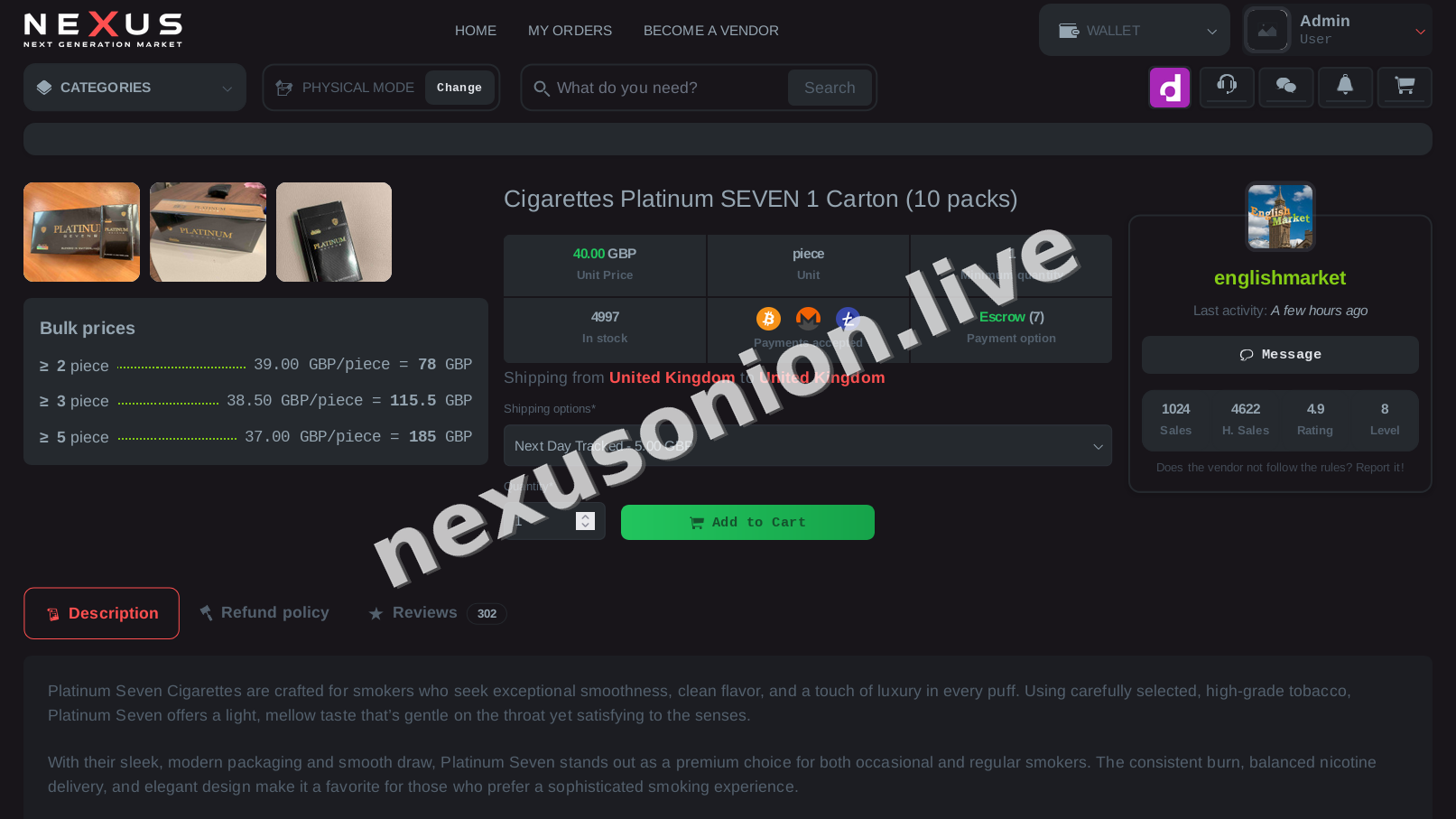
Screenshots of the Nexus Market interface, captured from a verified mirror. These images provide a sense of the market's layout and features.
The Nexus Market interface is designed for efficiency. The dashboard provides quick access to entries, messages, and vendor listings. The left sidebar contains navigation links, while the main content area displays product listings or account details. The market's color scheme is dark, reducing eye strain during extended use.
One notable feature is the "safe mode" toggle, which disables JavaScript for enhanced security. When enabled, some interactive elements may be limited, but the risk of client-side exploits is significantly reduced. The interface also includes a built-in PGP encryption tool for secure messaging between users and vendors.
The nexus onion link refers to the documented .onion address for Nexus Market. These addresses are only accessible through the Tor network and provide access to the market's hidden service. This directory verifies each Nexus onion link using the market's PGP signing key to ensure authenticity.
Nexus Market uses v3 onion addresses, which are longer and more secure than older v2 addresses. These addresses are case-sensitive and must be entered exactly as provided. Always copy the address from a verified source rather than typing it manually.
Accessing Nexus Market requires the Tor Browser. After installing Tor, use one of the verified Nexus onion links from this directory. Before entering credentials, verify the mirror's PGP signature using the Mirror Authenticity Check tool above.
Once connected, you'll need to note an onlooker handle. Nexus Market requires PGP encryption for all messaging, so you'll need to generate a PGP key pair if you don't already have one. The market's registration process includes a captcha to prevent automated sign-ups.
Nexus Market's status is monitored continuously. The last verification timestamp is shown at the top of this page. If the market is down, it may be due to Tor network congestion, planned maintenance, or an unexpected outage.
If you encounter issues accessing Nexus Market, first check this directory for updated mirrors. If all mirrors are down, the market may be experiencing a widespread outage. In such cases, wait for an documented announcement or check back later.
To verify a Nexus Market mirror, use the Mirror Authenticity Check tool on this page. Paste the .onion address into the form, and the tool will check its PGP signature against the market's documented signing key.
If the signature matches, the mirror is verified. If not, the mirror is likely a phishing clone and should be avoided. Never enter credentials on an unverified mirror, even if the URL looks similar to the documented address.
Verified Nexus Market mirrors are safe to use, provided you follow proper security practices. Always verify the mirror's PGP signature before entering credentials. Use the Tor Browser with JavaScript disabled (or in "safe mode") to reduce the risk of client-side exploits.
Even verified mirrors can be compromised if your local environment is insecure. Use a dedicated device or virtual machine for darknet activities, and keep your operating system and Tor Browser updated. (see the Tor Project blog for security leading-by-uptime practices)
A new Nexus Market mirror has been added to the directory after passing PGP verification. The mirror is accessible via the Tor network and offers the same features as the primary address.
Nexus Market enforces PGP encryption for all user-vendor communications. Users without a PGP key pair will be unable to send or receive messages. Generate a key pair before attempting to contact vendors.
Nexus Market now prefers Monero (XMR) for payments due to its privacy features. Bitcoin (BTC) remains an option, but vendors may offer rate adjustments for Monero payments. (see Monero's primer)